The Voiland School of Chemical Engineering and Bioengineering is excited to welcome our new 2025 faculty member, Bin Cao.
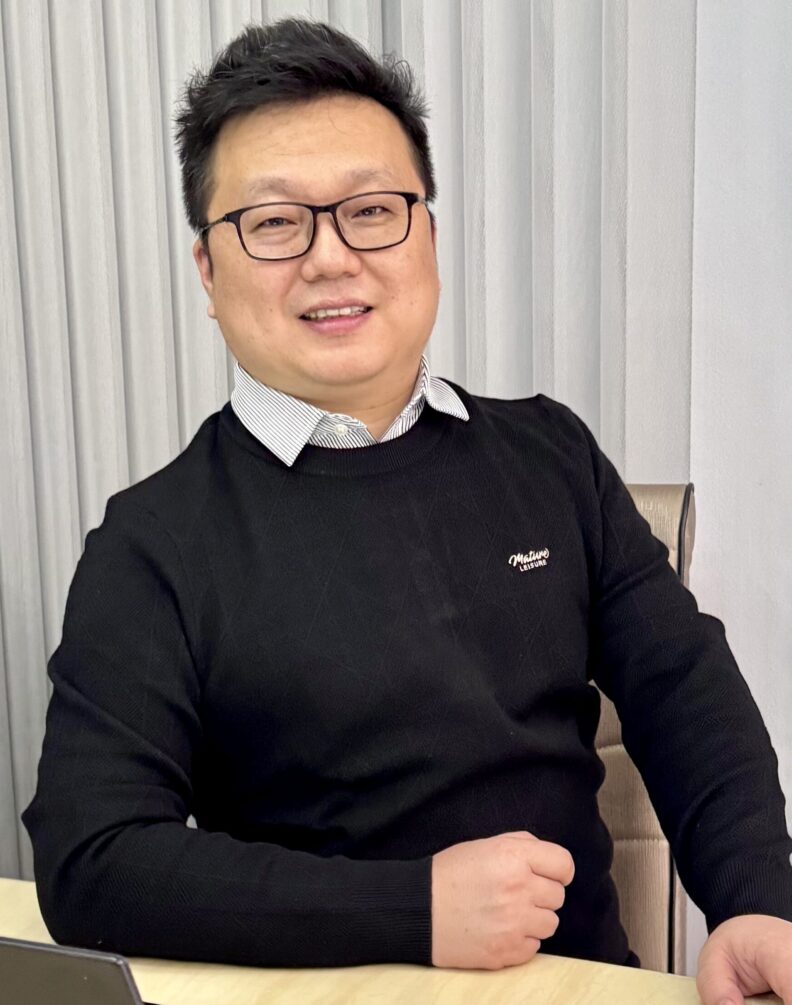
Bin Cao
In general terms, what does your research consist of?
Imagine you have a colony of bacteria that can do useful things, like breaking down harmful chemicals, cleaning water, or producing useful molecules, but in nature, they don’t always do exactly what we want — They may grow slowly, get poisoned, or form messy structures.
Our research is like being a “microbial engineer.” We study how these microbes live together or form a desirable structure, how they interact with others, environments and surfaces, and how to control or “program” them so they keep doing the useful job under real-world conditions. We combine ideas from biology, chemistry, and engineering to design systems where microbes help us recover resources, clean water, and reduce waste.
What drew you to your field of study and to being a professor?
Math and science have always fueled my curiosity and excitement. For as long as I can remember, I have dreamed of becoming a professor — someone who could teach, explore, and create.
That aspiration was likely nurtured by my father and several uncles, all teachers of math and physics, whose influence planted the seed for my own path.
When I was about to graduate from high school, the Nobel Prize was awarded for the discovery of C60, the “buckyball.” Its elegant, almost artistic structure inspired me to pursue materials science.
But when I got into the Ph.D. program in Chemical and Biomolecular Engineering, my path took an unexpected turn. During lab rotation, I encountered research on how bacteria could “eat” toxic industrial pollutants, and I was immediately fascinated. The professor leading the work was a recent MIT graduate, and at first, he hesitated to take me into his lab.
Later, he told me it was a single line on my CV that changed his mind: “Give me an opportunity, I’ll return you a miracle.” That opportunity became the gateway to my lifelong journey in microbial biotechnology and bioengineering, a journey that still excites and inspires me today.
What have you learned from your work that surprised you?
What has surprised me most in my work is just how versatile and powerful bacteria can be, especially when combined with the tools of synthetic bioengineering. I have learned that these tiny organisms are not only capable of surviving in challenging environments but can also be reprogrammed to perform entirely new tasks, from breaking down pollutants to producing valuable materials. Time and again, their adaptability and creativity in solving problems exceed my expectations, reminding me that nature often holds solutions more elegant than anything we could design from scratch.
If you could name one person who inspires you, who would it be and why?
One person who inspires me is Francis Crick. Reading “The Double Helix” as a student, I was struck not only by the groundbreaking discovery of the DNA structure but also by Crick’s relentless curiosity and willingness to challenge conventions. What inspires me most is his ability to combine bold, big-picture thinking with the persistence to pursue details that others overlooked.
His work reminds me that transformative discoveries often come from those who are willing to see beyond boundaries, and that science is at its best when driven by curiosity, imagination, and rigor.
What’s your favorite spot on campus or in the Pullman area?
Minh’s Restaurant is my favorite place in Pullman. My wife, son, and I go there at least once a week because we all love their pho.
What do you like to do when you’re not teaching or conducting research?
I enjoy cooking and exploring new places with my wife and son. I also like playing piano, which not only brings me joy but also sharpens my memory and focus, boosts creativity, and strengthens my sense of discipline and time management.
What do you think will make Voiland School a great place to teach, conduct research, and learn?
To me, a great engineering school is one where faculty are supported to innovate in research and teaching; staff are empowered and valued as essential partners; students are inspired to become lifelong learners; and a spirit of collaboration, mutual support, inclusion, and impact thrives. I feel fortunate that the Voiland School offers all of these.
Anything that people might be surprised to know about you?
I only started enjoying durian (a tropical fruit) and laksa (aromatic noodle soup) in my thirties, and I miss them now.