The Ensor Lectureship was established in 2016 to encourage communication and collaboration on emerging ideas in any area related to chemical engineering, bioengineering, aerosol technology and nanotechnology.
David Ensor (’63, chemical engineering) and his wife, Sara, established the lectureship as a reflection of their deep interest in higher education and their strongly held belief in the empowerment that education provides for one’s life.
2025 Lecturer
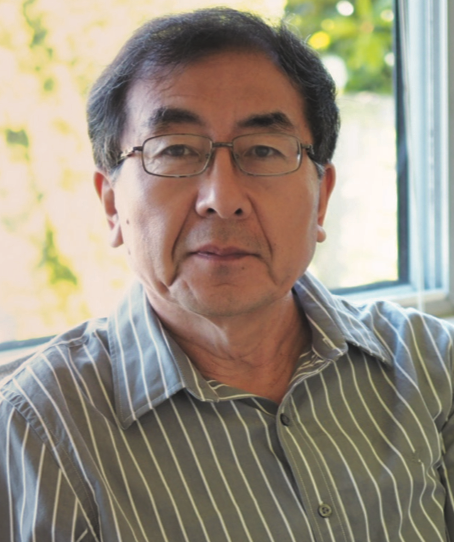
Jingguang Chen
Jingguang Chen is the Thayer Lindsley Professor of Chemical Engineering at Columbia University, with a joint appointment at Brookhaven National Laboratory. He received his B.S. degree from Nanjing University and his PhD degree from the University of Pittsburgh. After finishing an Alexander von Humboldt postdoctoral fellowship in Germany, he joined the Exxon Corporate Research Laboratory for several years. He started his academic career at the University of Delaware and rose to the rank of the Claire LeClaire Professor of Chemical Engineering and the Director of the Center for Catalytic Science and Technology. He is the co-author of over 500 journal publications and over 20 United States patents. His research interests include fundamental understanding of carbides, nitrides and bimetallic catalysts for applications in thermocatalysis and electrocatalysis. His research group utilizes a combination of experimental studies, in-situ characterization and density functional theory calculations.
He served in many leadership positions, including the Chair of the Catalysis Division of the American Chemical Society, the President of the North American Catalysis Society, and the Chair of Gordon Research Conference on Catalysis. He was a co-founder and the director of the Synchrotron Catalysis Consortium, which was established in 2025 with support from the Department of Energy to assist catalysis researchers to utilize synchrotron techniques. He is an Executive Editor of ACS Catalysis and has been on the editorial advisory boards of many journals. He received the George Olah Award on Hydrocarbon Chemistry from the American Chemical Society, the Robert Wilhelm Award on Chemical Reaction Engineering from the American Institute of Chemical Engineers, and the Robert Burwell Lectureship from the North American Catalysis Society. He is a member of the National Academy of Engineering.
Lecture: Upgrading CO2 and Biogas to Value-added Products via Tandem Catalytic Strategies
Converting CO2 to value-added products is one of the most practical routes for reducing CO2 emissions while fossil fuels continue to dominate the energy sector in the foreseeable future. Thermochemical conversion of CO2 into value-added products, such as olefins, oxygenates and carbon nanofibers, requires the utilization of molecular H2. In order to achieve a net-negative CO2 footprint, H2 needs to be produced from water electrolysis instead of from hydrocarbon sources. However, large-scale deployment of water electrolysis in acidic electrolytes is hindered by the high cost of precious metal electrocatalysts, such as platinum (Pt) for the hydrogen evolution reaction (HER) at the cathode and iridium (Ir) for the oxygen evolution reaction (OER) at the anode. In the first part of this talk, we will discuss our recent efforts in developing cost-effective HER and OER electrocatalysts. We will also discuss tandem processes involving generating H2 from an electrochemical reactor and its subsequent use for CO2 conversion in a thermochemical reactor.
In addition to CO2, upgrading decentralized biogas (CH4 and CO2) represents a sustainable route to simultaneously mitigate two potent greenhouse gases. Due to reaction thermodynamics, the conversion of biogas to value-added products cannot be achieved effectively using a single reactor. In the second part of this presentation, we will discuss the conversion of CO2 or biogas using tandem thermochemical and electrochemical reactors to produce carbon nanofibers. We will demonstrate the potential advantages of tandem processes, including reducing reaction temperatures, shifting equilibrium limits, and generating products that cannot be achieved using a single reactor. We will also discuss general tandem strategies involving thermocatalysis, electrocatalysis, biocatalysis and plasma-activated catalysis for the upgrading of CO2 and light alkanes.
Past Lecturers
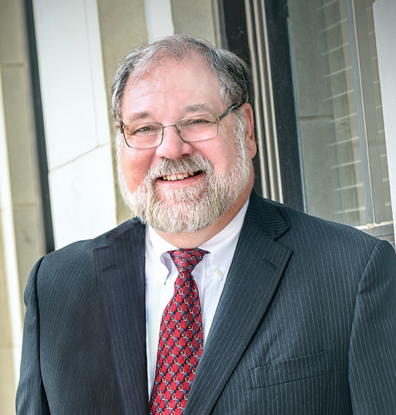
Lecture: A personal tour of surface acid-base chemistry and catalysis: from solution to the gas phase and back again.
Mark A. Barteau is a Professor in the Departments of Chemical Engineering and Chemistry at Texas A&M University, where he holds the Charles D. Holland ‘53 Chair and previously served as the Vice President for Research. He was the Director of the University of Michigan Energy Institute from 2012 to 2018. Prior to that, he was the Senior Vice Provost for Research and Strategic Initiatives at the University of Delaware, where he held appointments as the Robert L. Pigford Endowed Chair of Chemical Engineering and Professor of Chemistry & Biochemistry. He was elected to the National Academy of Engineering in 2006, and the National Academy of Inventors in 2018. He received his B.S. degree in Chemical Engineering from Washington University in St. Louis, and his M.S. and Ph.D. from Stanford. He was an NSF Post-doctoral Fellow at the Technische Universität München, before joining the University of Delaware faculty in 1982. His research, presented in more than 250 publications and a similar number of invited lectures, focuses on chemical reactions at solid surfaces and their applications in heterogeneous catalysis and energy processes. He has also contributed perspectives on energy, environment, economics, and policy to The Conversation, Fortune, The Hill, and NPR, among other media outlets.
Dr. Barteau was named in 2008 as one of the “100 Engineers of the Modern Era” by the American Institute of Chemical Engineers (AIChE). He is a fellow of both AIChE and the American Association for the Advancement of Science. He has received numerous awards, including the 2018 Lawrence K. Cecil Award in Environmental Chemical Engineering, the 2001 Alpha Chi Sigma Award, and the 1991 Allan P. Colburn Award, presented by AIChE; the 1998 International Catalysis Award, presented by the International Association of Catalysis Societies; the 1995 Ipatieff Prize from the American Chemical Society; the Paul H. Emmett Award in Fundamental Catalysis, given by the North American Catalysis Society, and the 1993 Canadian Catalysis Lecture Tour Award of the Catalysis Division of the Chemical Institute of Canada. He has served as associate editor of the AIChE Journal and WIRES Energy and Environment, and on the editorial boards of a number of other Journals, including Industrial & Engineering Chemistry Research and the Journal of Catalysis.
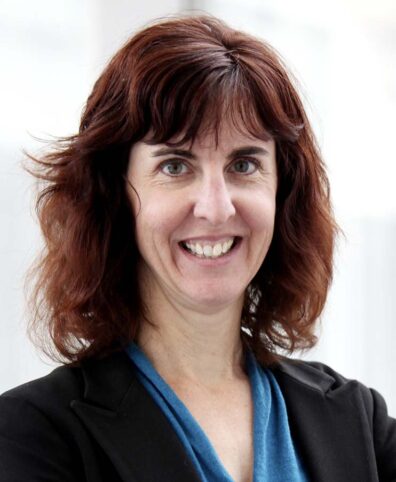
Lecture: Developing Strategies for Polymer Redesign and Recycling Using Reaction Pathway Analysis.
Linda Broadbelt is the Sarah Rebecca Roland Professor in the Department of Chemical and Biological Engineering (ChBE) and Associate Dean for Graduate Research and Education of Engineering at Northwestern University. She was Chair of the Department of ChBE from 2009-2017. Her research and teaching interests are in multiscale modeling, complex kinetics modeling, catalysis, novel biochemical pathways, and polymerization/depolymerization kinetics. She served as the Past Chair, Chair, First Vice Chair and Second Vice Chair of the Catalysis and Reaction Engineering Division of AIChE, and also served on the Executive Board of the National Program Committee of AIChE and the Board of Directors. She is currently an Associate Editor for Industrial &Engineering Chemistry Research and ACS Engineering Au. Her honors include selection as the winner of the R.H. Wilhelm Award in Chemical Reaction Engineering from AIChE, the E.V. Murphree Award in Industrial Chemistry and Engineering from the American Chemical Society, the Dorothy Ann and Clarence Ver Steeg Award, a CAREER Award from the National Science Foundation, and an AIChE Women’s Initiative Committee Mentorship Excellence Award, and selection as a Fellow of the American Association for the Advancement of Science, a Fellow of AIChE, a Fellow of AIMBE, and a Fulbright Distinguished Scholar. She was elected to the National Academy of Engineering in 2019. In 2021, she was elected to the American Academy of Arts & Sciences.
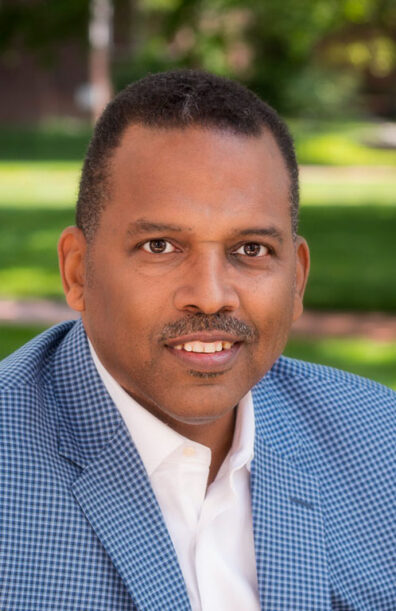
Lecture: Turning Base Metals into Gold: The Unusual Properties of Nanostructured Early Transition Metal Carbides and Nitrides.
Professor Thompson is Dean of the College of Engineering and Elizabeth Inez Kelley Professor of Chemical Engineering at the University of Delaware. He leads a college of nearly 200 faculty, 3,600 students and 120 staff with a number of major research centers. Professor Thompson earned his B.ChE. from the University of Delaware, and M.S.E. degrees in Chemical Engineering and Nuclear Engineering, and a Ph.D. in Chemical Engineering from the University of Michigan (UM).
He was a faculty member at the University of Michigan where he served as Associate Dean for Undergraduate Education, Director of the Hydrogen Energy Technology Laboratory and Director of the Michigan-Louis Stokes Alliance for Minority Participation. His scholarly research on nanostructured materials for catalytic and energy storage applications is described in more than 150 publications and more than 10 patents.
He is a member of the National Academy of Engineering, a Fellow of the AIChE and recipient of awards including the NSF Presidential Young Investigator Award, McBride Distinguished Lectureship, Union Carbide Innovation Recognition Award, and Michiganian of the Year Award for his research, entrepreneurship, and teaching. He co-founded T/J Technologies, a developer of nanomaterials for advanced batteries that was acquired by A123 Systems, and Inmatech, a developer of low cost, high energy density supercapacitors for automotive and military applications.
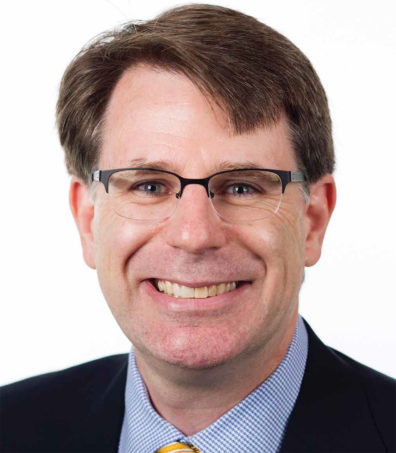
Lecture: Amine-Modified Silicates as CO2 Sorbents that Enable Direct Air Capture Technologies.
Christopher Jones is the William R. McLain Chair and Professor of Chemical & Biomolecular Engineering at Georgia Tech. He previously served as Associate Vice President for Research from 2013-2019, including a period as Interim Executive Vice-President for Research in 2018.
Dr. Jones leads a research group that works in the broad areas of materials, catalysis and adsorption. He is known for his extensive and pioneering work on materials that extract CO2 from ultra-dilute mixtures such as ambient air, which are key components of direct air capture (DAC) technologies. For the past decade, he has worked closely with Global Thermostat LLC, on DAC technology development.
He also has produced extensive body of work in catalysis, including heterogeneous and homogeneous catalysis, spanning from asymmetric catalysis in organic synthesis (specialty synthesis) to conversion of syngas into higher alcohols (commodity production).
Jones has published almost 300 peer-reviewed scholarly papers on catalysis and separations, and has mentored 100 MS, PhD and post-doctoral students over the past 20 years.
The American Chemical Society recognized Jones’ catalysis research with the Ipatieff Prize in 2010, followed by the North American Catalysis Society with the Paul H. Emmett Award in Fundamental Catalysis in 2013. Dr. Jones is the founding Editor-in-Chief of the journal, ACS Catalysis, and is Vice-President of the North American Catalysis Society.
In 2016, he was recognized by the American Institute of Chemical Engineers for his work in catalysis and CO2 capture with the Andreas Acrivos Award for Professional Progress.
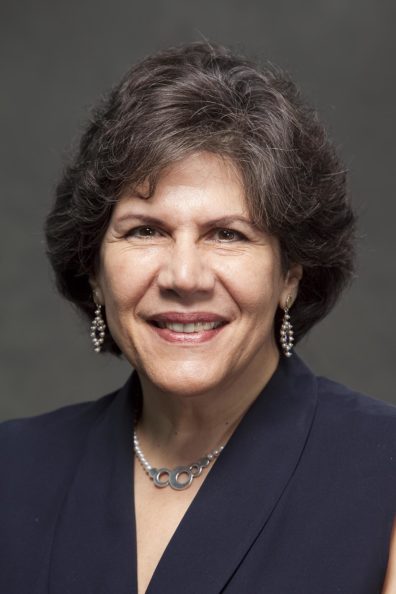
Lecture: The Changing Landscape of Heterogeneous Catalysts: Single Metal Atoms as Game‑Changers.
Dr. Flytzani-Stephanopoulos is a Distinguished Professor and the Robert and Marcy Haber Endowed Professor in Energy Sustainability in the School of Engineering at Tufts University. She directs the Tufts Nano Catalysis and Energy Laboratory, which investigates new catalyst materials for efficient and clean production of hydrogen and chemicals. Pioneering work from her lab has demonstrated the use of single atom heterogeneous catalysts for several reactions of interest to fuels and chemicals processing. These catalysts with 100% atomic efficiency of precious metals and high selectivity to the desired product will enable more efficient and sustainable chemical process development. Dr. Flytzani-Stephanopoulos joined the Chemical Engineering faculty at Tufts in 1994. She holds ten patents and has written more than 170 technical papers. She has been an editor of the journal Applied Catalysis B: Environmental since 2002, and is an associate editor of Science Advances. She is the recipient of many awards and distinctions, including the Tufts Distinguished Scholar award, the Henry J. Albert award of the International Precious Metals Institute, the Giuseppe Parravano Memorial award of the Michigan Catalysis Society, the Graduate Teaching and Mentoring Award of the Tufts School of Engineering, and the Carol Tyler award of the IPMI. She holds Honorary Professorships at Tianjin University and the Beijing University of Chemical Technology, is a Fellow of the AAAS and the AIChE, and a member of the US National Academy of Engineering.
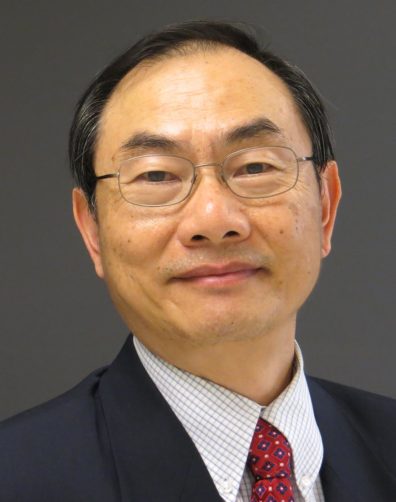
Lecture: Chemical Looping Technology for Combustion, Gasification, Reforming, and Chemical Syntheses.
L.-S. Fan is Distinguished University Professor and C. John Easton Professor in Engineering in the Department of Chemical and Biomolecular Engineering at The Ohio State University. He has been on the faculty of Chemical Engineering at Ohio State since 1978 and served as Department Chair from 1994 – 2003. Professor Fan received his B.S. (1970) from National Taiwan University, and his M.S. (1973) and Ph.D. (1975) from West Virginia University, all in Chemical Engineering. In addition, he earned an M.S. (1978) in Statistics from Kansas State University.
Professor Fan’s expertise is in fluidization and multiphase flow, powder technology and energy and environmental reaction engineering. He is an inventor of 7 industrially viable clean fossil conversion processes: OSCAR, CARBONOX, PH Swing, CCR, Calcium Looping, Syngas and Coal-Direct Chemical Looping Processes. These processes control sulfur, nitrogen oxide and carbon dioxide emissions and convert carbonaceous fuels to hydrogen, electricity or liquid fuels. He also invented the electrical capacitance volume tomography for 3-dimensional, real time multiphase flow imaging that is currently being used in academia and industry. Professor Fan is the Editor-in-Chief of Powder Technology and has served as a consulting editor of ten other journals and book series, including the AIChE Journal, I&EC Research, and the International Journal of Multiphase Flow. He has authored or co-authored five books, 420 journal papers, and 55 patents.
Professor Fan has received a number of awards in recognition of his research and teaching including the ACS E. V. Murphree Award, the AIChE Alpha Chi Sigma, R. H. Wilhelm, and 67th Institute Lectureship Awards, the ASEE Dow Lectureship, the CCR Malcolm Pruitt Award, the R&D 100 Award, International Fluidization Achievement Award, and The Ohio State University Charles E. MacQuigg Award for Outstanding Teaching and Joseph Sullivant Medal for Distinguished Teaching, Research and Service. He is a Fellow of the American Association for the Advancement of Science (AAAS) and the AIChE, as well as a Member of the U. S. National Academy of Engineering, the Chinese Academy of Engineering, the Australia Academy of Technology Science and Engineering (ATSE), the Mexican Academy of Sciences, and the Academia Sinica. Professor Fan was named in 2008 as one of the “One Hundred Engineers of the Modern Era” by the AIChE.
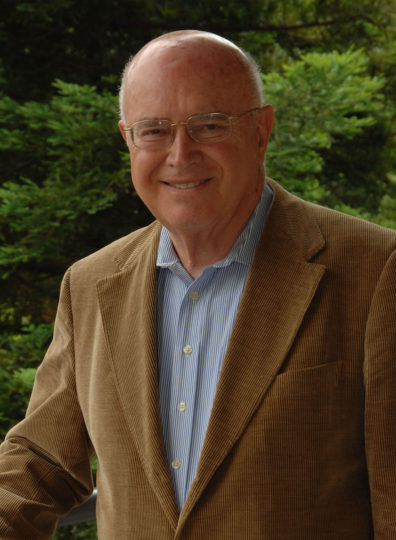
Lecture: The Surface Science Approach to Molecular Catalysis: Transition from Studies of Crystal Surfaces in Vacuum to High Pressure and Liquid Phase Heterogeneous, Homogeneous, and Enzyme Nanoparticle Catalysis.
Gabor A. Somorjai is a professor of chemistry at the University of California, Berkeley, and is a leading researcher in the field of surface chemistry and catalysis, especially the catalytic effects of metal surfaces. For his contributions to the field, Somorjai won the Wolf Prize in Chemistry in 1998, the Linus Pauling Award in 2000, the National Medal of Science in 2002, the Priestley Medal in 2008, the 2010 BBVA Foundation Frontiers of Knowledge Award in Basic Science and the NAS Award in Chemical Sciences in 2013. Most recently, in April 2015, Somorjai was awarded the American Chemical Society’s William H. Nichols Medal Award. During his career, Somorjai has published more than one thousand papers and three textbooks on surface chemistry and heterogeneous catalysis. Somorjai’s expertise in surfaces was used as a consultant to the 2002 Winter Olympics where he gave advice on how to make ice-skating surfaces as fast as possible. He is now the most-often cited person in the fields of surface chemistry and catalysis. The Gabor A. Somorjai Award for Creative Research in Catalysis, consisting of US$5,000 and a certificate, is given annually to recognize outstanding research in the field of catalysis.
Lecture: Molecular Metal Catalysts on Supports: Organometallic Chemistry Meets Surface Science.
Bruce Gates studied chemical engineering at Berkeley (B.S., 1961) and the University of Washington (PhD, 1966) and with a Fulbright grant did postdoctoral research at the Ludwig Maximilians University of Munich. He worked for two years as a research engineer at Chevron Research Company and began as an assistant professor at the University of Delaware in 1969, becoming the H. Rodney Sharp Professor of Chemical Engineering and Professor of Chemistry. In 1992 he joined the University of California, Davis, where he is Distinguished Professor in the Department of Chemical Engineering and Materials Science. He has spent four sabbatical years at the Ludwig Maximilians University of Munich and was recently a guest professor at Hokkaido University. Gates’s research is focused on catalysis, with an emphasis on essentially molecular metal complex and metal cluster catalysts anchored to solid surfaces and on catalytic conversion of biomass-derived compounds. He authored the textbooks “Catalytic Chemistry” and co-authored “Chemistry of Catalytic Processes.” He edited the monograph Advances in Catalysis for 18 years. He serves on the U.S. Department of Energy’s Basic Energy Sciences Advisory Committee. He has been recognized with awards from the American Chemical Society, American Institute of Chemical Engineers, the North American Catalysis Society, and the Council for Chemical Research. He is a member of the U.S. National Academy of Engineering.